Royal Dental College
E-ISSN: Coming Soon
E-ISSN: Coming Soon
The Distribution and Types of Carabelli Cusp in Dental Students - An Institutional Study
Full Html
INTRODUCTION
MATERIALS AND METHODS
A cross-sectional descriptive study was carried out in department of oral pathology and microbiology at Royal dental college. A total of 160 students ranging from age of 18-25 were clinically examined. Any individuals with severe caries, restorations or missing maxillary first molars or unilateral side were excluded. A verbal consent was solicited from the study participants prior to the oral examination. Permanent maxillary first molars were carefully examined for the Carabelli’s trait clinically from occlusal view using mouth mirror and dental explorer. Dahlberg classification system was used to score the trait on the teeth
Dahlberg’s (1963) scale for the determination degree and expression of Carabelli’s cusps
Type 0-Smooth
Type 1-Small vertical ridge and grooves diverging from depression
Type 2-Small pit with minor grooves diverging from depression
Type 3-Double vertical ridges or slight and incomplete cusp outline
Type 4-Y form moderate grooves curving in opposite directions
Type 5-Small tubercle tubercle
Type 6-Broad cusp outline, moderate Type 7-Large tubercle with free apex
When the observed teeth express the trait, it was marked and graded among 1 to 7 scores based on degree of expression. When observed teeth do not express the trait it was scored as Type 0. The teeth were examined by Two observers independently to eliminate intra-observer variation in interpretation.
RESULTS
A prospective study was conducted in our institution to assess the prevalence and patterns of cusp of Carabelli trait. The score was numerically taken by two observers and total value was expressed as percentile. Among 160 students, only 23 males (14.3%) were found. As the study group had majority of females (85.6%), the sex predilection in the Carabelli trait cannot be assessed. Cusp of Carabelli trait was expressed only in 17% (27) of the study group and majority of the cases had Type 0 (83%).(Table 1) (Chart 1)
Carabelli Trait | Number of cases |
Present | 27 |
Absent | 133 |
Table 1: Distribution of Carabelli trait among the study group
.jpg)
Chart 1: Bar graph showing distribution of cusp of Carabelli trait among the study group
It was found in the present study that type 0 (133 cases, 83%) was the most frequently expressed followed by Type 4 and Type 5 (5.6 %), (Figure 5) Type 6 (3.75%), (Figure 6) Type 3 (1.25%) and type 1 (0.6%) were least expressed and Type 2 and Type 7 was not expressed among the individuals (figure 1). The expression of the trait was bilateral among the surveyed groups. (Table 2) (Chart 2)
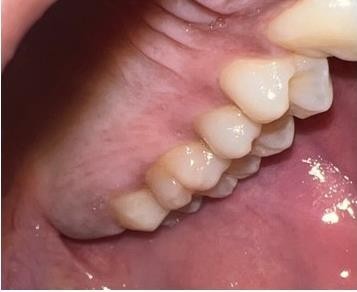
Figure 1 showing cusp of Carabelli Type 5
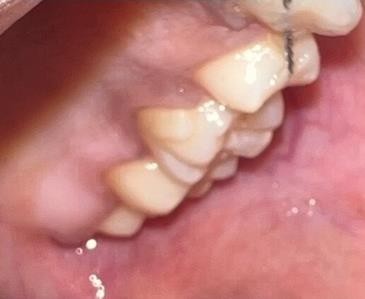
Figure 1 showingcusp of Carabelli Type 6
Type of cusp of Carabelli | Number of cases |
0 | 133 |
1 | 1 |
2 | 0 |
3 | 2 |
4 | 9 |
5 | 9 |
6 | 6 |
7 | 0 |
Table 2. Distribution of various types of cusps of Carabelli trait among the study group
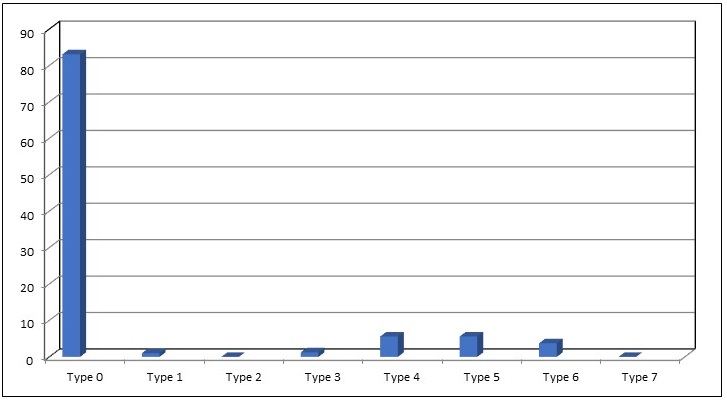
Chart 2: Bar graph showing distribution of various types of cusps of Carabelli trait among the study group
References
1. Hassan S, Nadaf A, Raina R. The Prevalence of Cusp of Carabelli in Maxillary Molars among the Kashmiri Population. J Adv Med Dent Scie Res 2020;8(1):42-44.
2. Mitchell WH. Case Report. Dental Cosmos 1892;34:1036.
3. Scott GR, Turner CG. The Anthropology of Modern Human Teeth: Dental Morphology and its Variation in Recent Human Populations. Cambridge: Cambridge University Press; 1997. (Cambridge Studies in Biological and Evolutionary Anthropology).
4. Turner CG 2nd. Advances in the dental search for Native American origins. Acta Anthropogenet. 1984;8(1-2):23-78. PMID: 6085675. 5. Sedano HO, Ocampo-Acosta F, Naranjo-Corona RI, Torres-Arellano ME. Multiple dens invaginatus, mulberry molar and conical teeth. Case report and genetic considerations. Med Oral Patol Oral Cir Bucal. 2009 Feb 1;14(2):E69-72. PMID: 19179952.
5. Sedano HO, Ocampo-Acosta F, Naranjo-Corona RI, Torres-Arellano ME. Multiple dens invaginatus, mulberry molar and conical teeth. Case report and genetic considerations. Med Oral Patol Oral Cir Bucal. 2009 Feb 1;14(2):E69-72.
6. Sureshbabu S, Ramadoss R, Arthanari A, Ramalingam K. Dental Anomalies: An Identification Marker in Forensics. Cureus. 2024 May 8;16(5):e59922.
7. Nair HR, Mishra S, Panda S, Srivastava G. Frequency and degree of inter-trait association of maxillary Non-Metric Dental Crown Traits in the permanent dentitions of two states of India. J Forensic Odontostomatol. 2020 May 15;38(1):18-25. PMID: 32420909; PMCID: PMC7880153.